Apple iOS 27 vs Samsung One UI 9: 5 Key Differences You Should Know
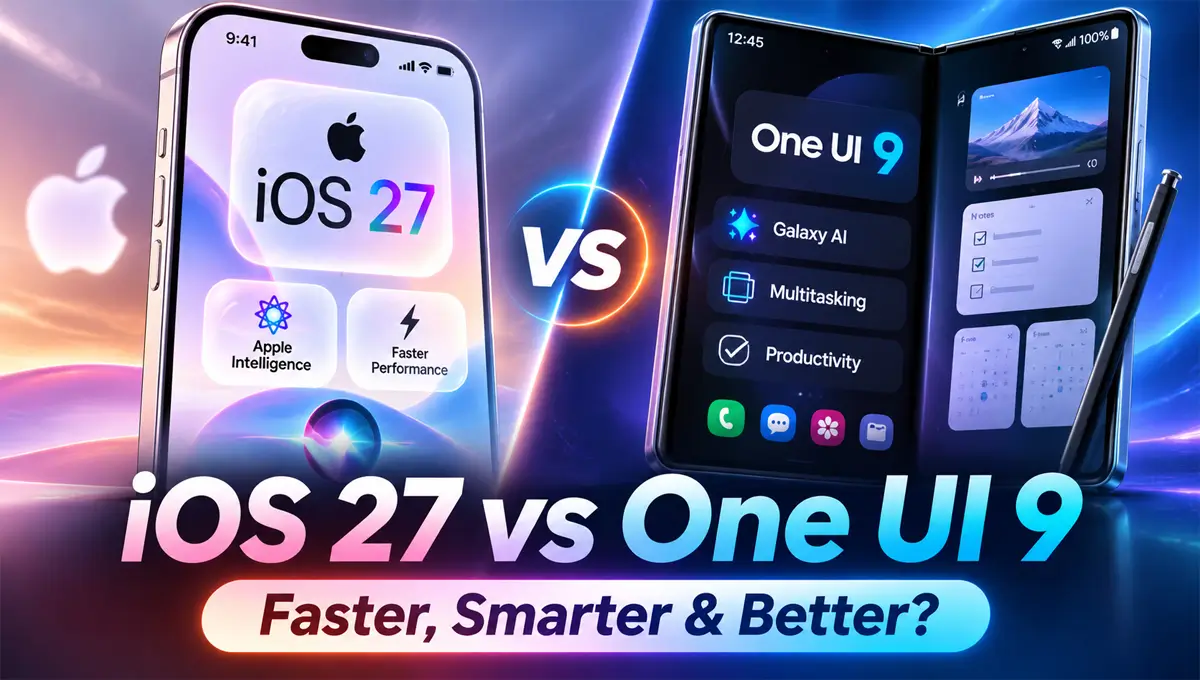
Apple's iOS 27 and Samsung's One UI 9 bring several improvements to smartphones. However, the two companies have taken different approaches to improving the user experience.
Apple released iOS 27 on September 14 for compatible iPhones. The update introduces a redesigned Siri AI experience, faster app performance and improvements to the Liquid Glass interface.
Meanwhile, Samsung is introducing One UI 9 on its latest Galaxy foldable phones before expanding it to other supported devices.
From everyday performance to artificial intelligence (AI), several differences could influence which platform users prefer.
iOS 27 vs One UI 9: Key differences at a glance
|
Feature |
Apple iOS 27 |
Samsung One UI 9 |
|---|---|---|
|
Performance |
Faster app loading |
Smoother navigation |
|
Interface |
Improved Liquid Glass design |
Greater customisation |
|
AI assistant |
Redesigned Siri AI |
Expanded Galaxy AI |
|
Multitasking |
Simpler app management |
Two-way and three-way split-screen |
|
Productivity |
Apple ecosystem integration |
Samsung DeX |
|
Connectivity |
iPhone, iPad and Mac |
Galaxy devices and Windows |
|
Personalisation |
More controlled design |
Flexible layouts and widgets |
Apple promises up to 30% faster app launches
Speed is one of the main areas Apple has focused on with iOS 27. The company says the update improves performance across several everyday tasks.
According to Apple's own performance figures:
-
Apps launch up to 30% faster.
-
New photos load in the Photos library up to 70% faster.
-
AirDrop file transfers are up to 80% faster.
Apple has also improved its Liquid Glass interface to make elements easier to read. A new slider allows users to adjust the transparency of the interface.
Samsung, meanwhile, says One UI 9 offers smoother navigation and better interactions when switching between apps and screens.
However, Apple's figures do not establish that iOS 27 is faster than One UI 9. A direct performance comparison would require independent tests.
Samsung offers more freedom and better multitasking options
One of the biggest differences between iOS 27 and One UI 9 is how much control users have over their smartphones.
Apple maintains a consistent interface with selected personalisation options. Samsung gives users more freedom to change layouts, organise apps and manage multiple windows.
On compatible devices, One UI 9 supports two-way and three-way split-screen views. Users can work with several apps on the same screen without constantly switching between them.
Samsung has also improved its DeX experience. Users can arrange app windows by snapping them into different areas of the screen.
Galaxy Z Flip8 users get additional cover-screen features. They can add, remove and rearrange widgets without opening the phone.
These options may make Samsung more appealing to people who use their smartphones for work and multitasking.
Siri AI vs Galaxy AI: What has changed?
Artificial intelligence is another major area of improvement for both platforms.
Apple's redesigned Siri can better understand personal context and conversational requests. According to Apple, it can use information from messages, emails and photos to help users find relevant details.
Siri can also understand content displayed on the screen and answer questions about it.
Samsung has taken a different approach by expanding its Galaxy AI tools. These include:
Now Nudge: Offers suggestions based on what users are doing on their phones.
My FanCam: Allows users to select a person in a recorded video and automatically keeps them centred in the frame.
Photo Assist: Allows users to describe photo edits through voice commands.
Now Brief: Provides personalised daily updates.
Apple focuses on making Siri a more capable personal assistant. Samsung offers a wider range of dedicated AI tools for different tasks.
However, AI feature availability on both platforms depends on the device, language and region.
Which offers better connectivity?
For people who already own several Apple products, iOS 27 offers the benefits of a connected ecosystem.
Features such as AirDrop, Handoff and Universal Clipboard allow users to share files and continue tasks across compatible iPhones, iPads and Macs.
Samsung also offers integration across Galaxy smartphones, tablets, watches and earbuds. Its connectivity with Windows computers makes it an appealing choice for people who work across different platforms.
The better option largely depends on which devices a user already owns.
iOS 27 or One UI 9: Which should you choose?
Apple's iOS 27 may be the better choice for users who prefer a simple interface, faster everyday tasks, an improved voice assistant and integration with other Apple products.
Samsung's One UI 9 may appeal more to users who want greater control over their smartphones, flexible multitasking and a wider selection of dedicated AI tools.
Neither platform is a clear winner in every category. Apple prioritises simplicity and a consistent experience, while Samsung offers greater flexibility and productivity options.
Users should also check whether their preferred features are available on their specific smartphone, as some improvements are limited to supported devices.
For the latest updates, follow HCS News